On April 30, the opening ceremony of the School of Digital and Intelligent Business and its High-Quality Development Forum were held at Wenhua Campus, Zhejiang University of Finance and Economics. Wei Jiang, Secretary of the Party Committee of ZUFE, and Chen Yantai, President and Deputy Secretary of the Party Committee, jointly unveiled the plaque for the School of Digital and Intelligent Business. As the red silk was pulled aside and the plaque was revealed, the School of Digital and Intelligent Business of Zhejiang University of Finance and Economics was officially launched.
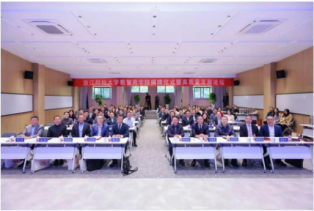
Attending the event were: Feng Xingke, Secretary-General of the World Finance Forum and Director of the BRICS Think Tank; Xi Chunying, Chairman of the Hong Kong Association of Small and Medium-sized Listed Companies; Yu Zheng, former Chairman of Minsheng Securities Co., Ltd., Chairman of the China Arts and Culture Foundation, and Founding Director of the International Institute of Finance at Fudan University; Yuan Zhongwei, President of the Zhejiang Human Resources Service Association and former Deputy Secretary of the Party Group and Deputy Director-General of the Zhejiang Provincial Department of Human Resources and Social Security; Hu Jiancheng, former Party Secretary of China Jiliang University, Member of the “Red Boat Spirit” Lecture Group of Zhejiang Province, and Alumnus of ZUFE; Shen Tianfeng, Partner of Grandall Law Firm, President of the Zhejiang Lawyers Association, Director of the Financial Committee of the All-China Lawyers Association, and Deputy to the Hangzhou Municipal People’s Congress; Yuan Xiaoqiang, Chairman of Zhonghui (Zhejiang) Tax Agent Firm and Vice President of the Zhejiang Certified Tax Agents Association; Zhong Jianguo, Executive Chief Partner of Pan-China Certified Public Accountants.
To unveil is to embark; to sail forward demands unwavering effort. The establishment of the School of Digital and Intelligent Business is a major event in the development history of ZUFE. Wang Yi, Member of the University Party Committee and Secretary of the Commission for Discipline Inspection; Zhou Biyu, Member of the University Party Committee and Vice President; Cheng Shuang, Deputy Secretary of the Party Committee of ZUFE; He Xianjie, Member of the University Party Committee and Vice President; Shen Tuli, Member of the University Party Committee and Vice President; Wang Zhengxin, Member of the University Party Committee and Vice President; Chen Xingping and Zhang Hong, Members of the University Party Committee; heads of relevant functional departments of the university; and Party and administrative heads of all schools witnessed this historic moment. The ceremony was hosted by Xu Xiaodong, Deputy Secretary of the Party Committee of ZUFE.
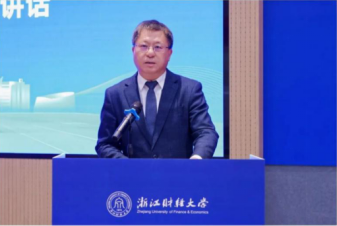
On behalf of ZUFE, Wei Jiang extended warm congratulations on the establishment of the School of Digital and Intelligent Business. He emphasized that the accelerating global wave of digital intelligence drives strong demand for interdisciplinary finance and economics talent. Year of Social Service Breakthroughs“Year of Social Service Breakthroughs” for ZUFE. The establishment of the School of Digital and Intelligent Business is a strategic layout made by the university based on long-term development by breaking traditional frameworks and inherent paradigms. It is a key step for the university to deepen the “"New Finance and Economics Strategy"”, build a new talent training system, and shape a new ecological system, and more importantly, it serves as a strategic platform supporting the construction of an “Innovative Zhejiang”. In this era of forging ahead with determination, we must focus on strategies and make precise efforts. Regarding the high-quality development of the school, he put forward three suggestions: First, take a high stance and undertake new responsibilities to accurately grasp the strategic positioning of the School of Digital and Intelligent Business. The school should proactively integrate into the construction of Zhejiang’s innovation system, industrial system, and governance system, and focus on key areas such as digital intelligence finance and economics, sci-tech innovation finance, and the cultivation of technology managers. It will serve as a pilot zone for deepening institutional and systemic reforms—operating with relative autonomy, independent financial accounting, market-oriented mechanisms, and project-based management—to explore new models characterized by “new forces, new teams, new mechanisms, and new mindsets.” Furthermore, it will become a service hub embedded in Hangzhou’s innovation ecosystem. Leveraging the geographic advantages of Wenhua Campus, the school will align closely with Hangzhou’s AI innovation cluster and the Chengxi Science and Technology Innovation Corridor, aiming to build a convergence zone for industry-education integration and a reservoir for high-end talent. Second, strengthen driving momentum and cultivate a new ecosystem to clearly anchor the School’s direction. The school will be developed into an open, market-driven and interdisciplinary innovation platform. It will unswervingly pursue platform-based development, pursue open cooperation with governments, industries, alumni and financial institutions, and establish a cross-disciplinary, cross-departmental and cross-industry collaboration mechanism—making the School a “powerful magnet” for talent aggregation, project landing and achievement transformation. It will remain committed to ecosystem-oriented development, building a closed-loop ecosystem encompassing “talent training, professional degree programs, achievement commercialization and integration of industry and education”, and pursue a high-quality development path characterized by self-sustaining capacity, long-term operation and iterative upgrading. Committed to integrated development, it will incorporate industrial demands into training curricula, embed practical scenarios into teaching processes, and achieve precise alignment of the education chain, talent chain, innovation chain and industrial chain. Third, uphold high quality and explore new models to break new ground for the development of the School of Digital Intelligence Business. Guided by brand building, the school will stick to a high-end orientation and quality-focused approach. It will develop a portfolio of iconic, pioneering and exemplary programs, and endeavor to build a top-tier brand for digital intelligence and finance that leads the province and ranks among the nation’s best. It will always observe compliance rules, strictly follow regulations governing student admission, fee collection, teaching, finance and ideological work, and run the institution lawfully, with integrity and in full security. Committed to open education, it will pool resources with a global vision and further advance in-depth cooperation with enterprises, local authorities and international partners, making it more substantive and impactful.
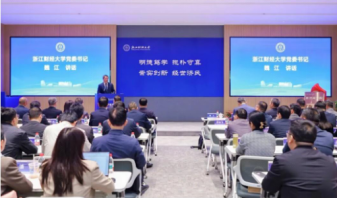
Wei Jiang called on all colleagues to take this opening ceremony as a new starting point, with new forces, new teams, new mechanisms, and new thinking, to bravely undertake missions and work hard for excellence. He urged everyone to strive to build the school into a new engine, a new benchmark, and a new calling card for ZUFE to serve the national strategy and the high-quality development of Zhejiang Province.
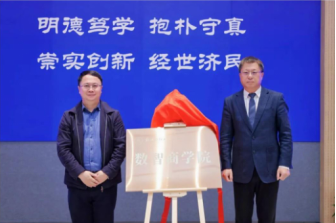
Amid warm applause from the audience, Wei Jiang and Chen Yantai jointly unveiled the plaque for the School of Digital and Intelligent Business. The inauguration marks a new journey toward the future. The establishment of the School will surely inject new vitality and new momentum into the university’s high-quality development.
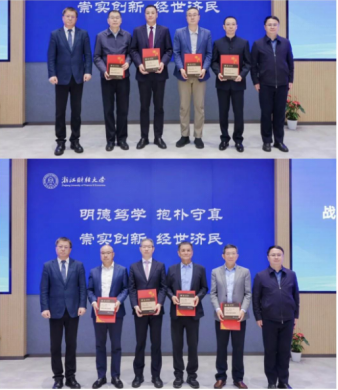
Subsequently, Wei Jiang and Chen Yantai jointly presented letters of appointment to the attending experts as members of the Strategic Advisory Committee. By joining strong forces and pooling wisdom, the Committee will provide guidance and suggestions for the School’s development, helping it build a distinctive brand and achieve high-quality development.
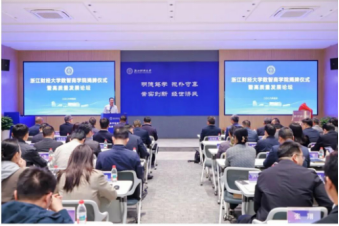
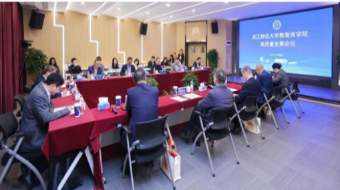
After the inauguration ceremony, the High-Quality Development Forum of the School was held. All experts of the Strategic Advisory Committee offered suggestions for the School’s development. During the forum, the experts delivered keynote presentations in turn. Drawing on their professional expertise and industry experience, they focused on global financial trends, compliance and operational risk prevention and control, innovation in talent cultivation models, pathways for integration between industry and education, international development and other topics. They clarified the direction and laid out the thinking for the School’s high-start launch, high-standard construction and high-quality development.
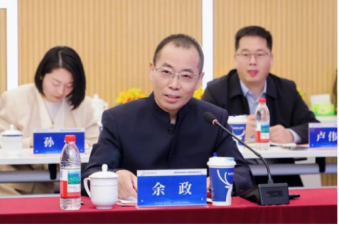
Yu Zheng pointed out that the School should improve institutional development and medium- and long-term planning, and fully leverage the expertise of its advisers. It should take root in Zhejiang, extend its reach nationwide, and strive for international influence. It should establish extensive strategic cooperation, develop distinctive courses integrating theory and practice, and run its first cohort well.
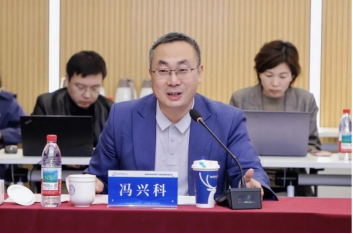
Feng Xingke pointed out that in the AI era, universities should help students to feel the value and meaning of being human. They must cooperate with enterprises, pursue open education, and strengthen international cooperation. He will fully support the School in making good use of social resources, launching customized training programs, and serving national strategies.
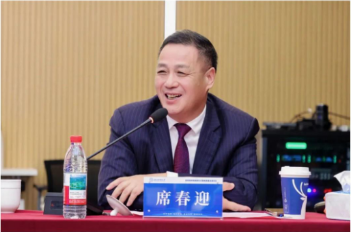
Xi Chunying pointed out that educational reform is an important task. The School should serve as a platform for promoting reform, with a focus on institutional transformation and industrialization. It should also keep pace with the times, explore ways to cultivate future talents with AI, and help small and medium-sized enterprises (SMEs) grow and strengthen.
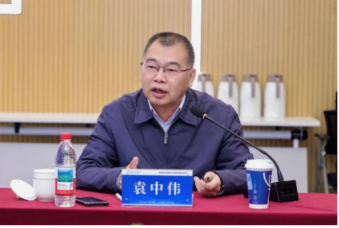
Yuan Zhongwei pointed out that the School should adhere to market-oriented operation and project-based management, taking “digital intelligence + artistry” as its orientation. By establishing a vocational skills competition system, developing a large-model-based recruitment and job-matching platform, and projectss, it will achieve “a small entry point with a big impact”.
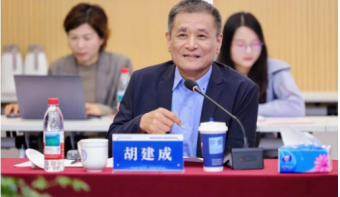
Hu Jiancheng affectionately reviewed his profound bond with the university and noted that teachers should have academic qualifications, professional experience, and broad vision. distinctive educational programss, it is necessary to break down barriers between colleges, majors, and industries, pursue open education, open innovation, and pool resources from diverse sources, so as to explore a new path for the university’s development.
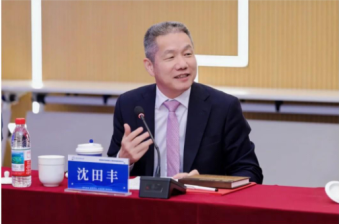
Shen Tianfeng pointed out that in the face of epochal changes, education should take mathematics, humanities, philosophy, and physical education as its basic languages, and use digital approaches to transcend the digital itself, and cultivate talents with true integrative competence rather than examination-oriented apprentices.
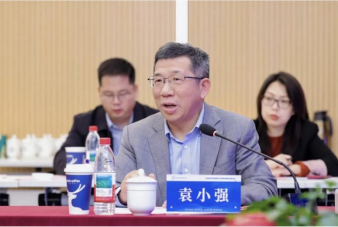
Yuan Xiaoqiang pointed out that interdisciplinary talents have gradually become an urgent need. He proposed building a new paradigm of in-depth integration of “finance + digitalization”, creating a practical training base, and developing distinctive general education courses of “AI + humanities + finance and economics” with “finance and economics humanities” as the foundation.
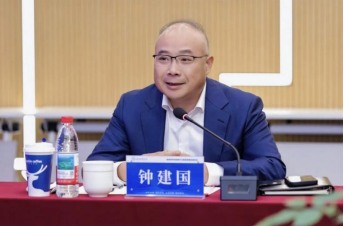
Zhong Jianguo reflected on the deep-rooted ties between Pan-China and ZUFE, pointing out that there remains a gap between talent cultivation and industry needs. He pledged to align with the School’s practical needs, repay the university with concrete actions, and deepen integration between industry and education.
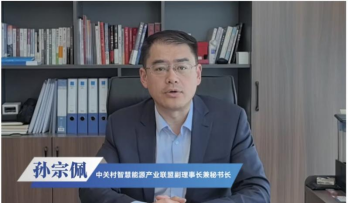
Sun Zongpei proposed building an “Industry Problem Laboratory”, establishing a closed-loop model of “customized training + in-depth consulting + joint research”, and launching a “revolving door” system for industrial practice professors. He called for developing the School into a nationally first-class hub for cross-disciplinary innovation in digital finance and economics.
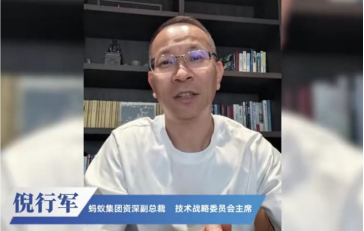
Ni Xingjun stated that he would serve as a bridge, bringing real enterprise needs to the School and transferring the School’s advanced research achievements to enterprises, so as to jointly build a new paradigm of talent training featuring “proficiency in technology, industry, capital, management and innovation”.
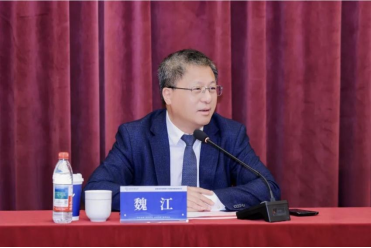
At the end of the forum, Wei Jiang, on behalf of the university, extended his sincere gratitude and deepest respect to all the experts. He pointed out that the School of Digital and Intelligent Business is a pivotal juncture in the university’s strategic transformation. The best tribute is to translate experts’ wisdom into concrete actions and turn collective intellectual strength into tangible development momentum. He emphasized that the essence of a university is to cultivate people. All ZUFE faculty should strive with the commitment of “Success is not necessarily achieved by me, but it will never be achieved without me”, act with urgency to accelerate reform, and build a new model for ZUFE’s future development. They will make new and greater contributions to building the university into a high-level institution and advancing Zhejiang’s high-quality development.
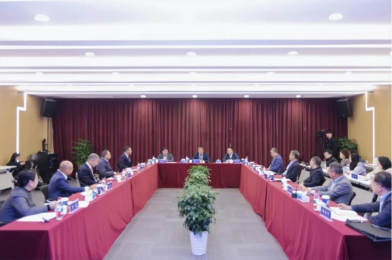
The forum was presided over by Zhou Biyu, Member of the University Party Committee and Vice President.
A new journey has begun. The School of Digital and Intelligent Business acts as a core carrier and key engine for the university to support an innovative Zhejiang, empower the integration of new-type industrialization and urbanization, and deepen university-local coordination. Its core positioning is to be rooted in the core track of “digital intelligence + finance and economics”, benchmark the interdisciplinary talent paradigm of proficiency in technology, industry, capital, management and innovation, build an open, collaborative, high-end and international talent cultivation system, and establish a pilot ground and demonstration zone for the university’s talent development reform.
(Reported by Ping Qianhui | Edited by Che Peng | Photographed by Dai Junhao)