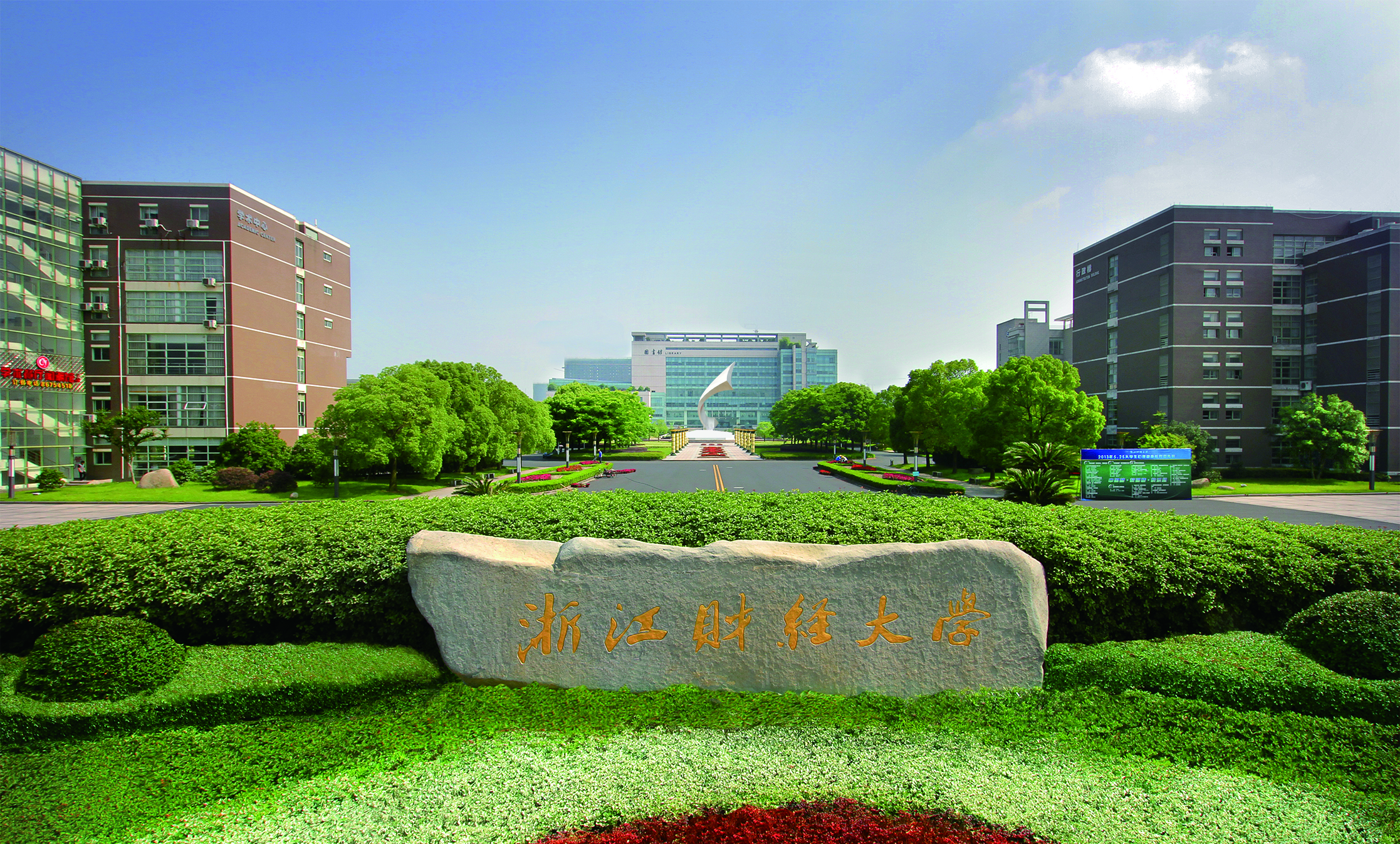
On October 25, the “2025 International Symposium on Government Regulation Theory and Policy” was held at the Xiasha Campus of our university. The symposium gathered leading scholars and experts in government regulation from China, the United States, the United Kingdom, Italy, Australia, Japan, Finland, and Hong Kong SAR, who engaged in in-depth discussions on theoretical innovation and policy practice in government regulation.
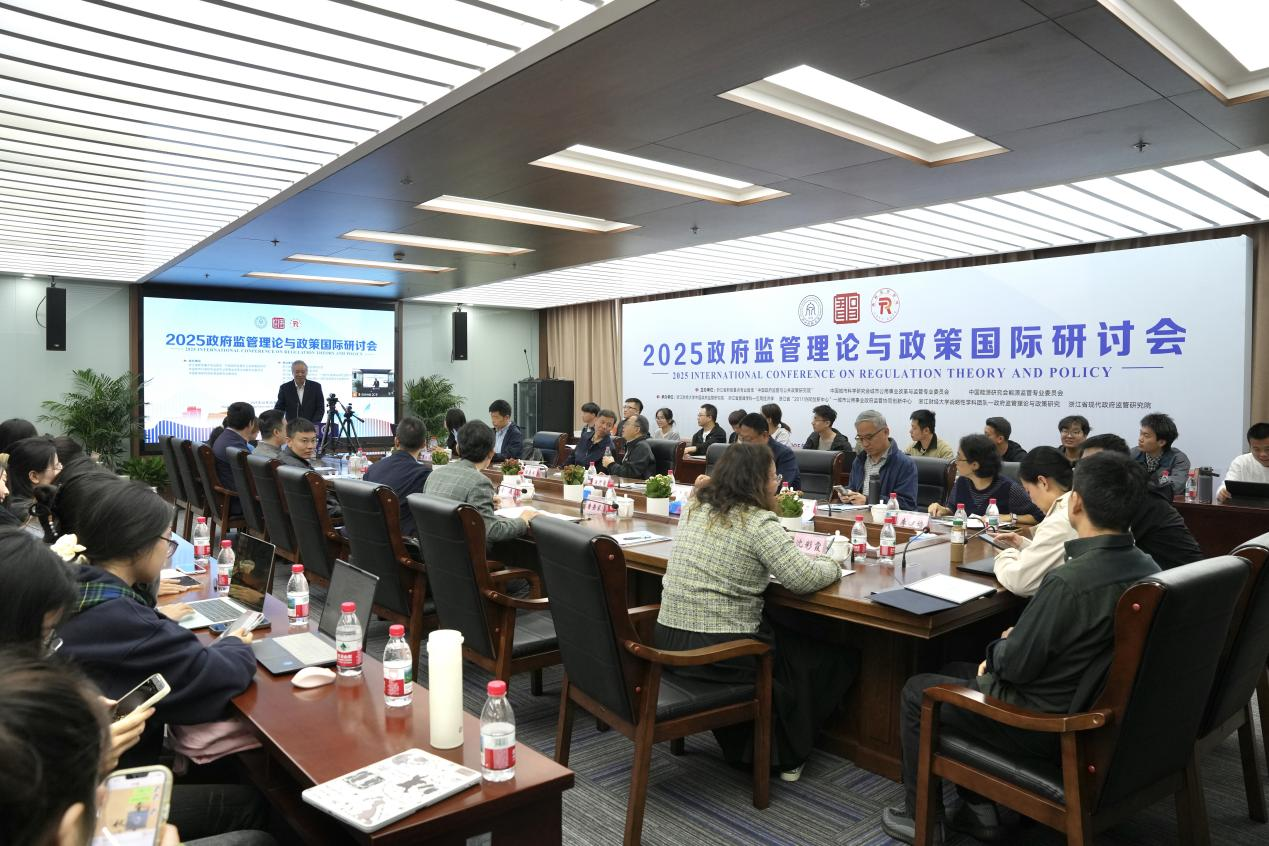
The event was jointly organized by the Zhejiang Provincial Key Think Tank—“China Institute for Government Regulation and Public Policy” (also known as the “ZUFE Regulation Think Tank”), the Urban Utilities Reform and Regulation Committee of the Chinese Society for Urban Studies, and the Energy Regulation Committee of the China Energy Research Society. It was co-hosted by Zhejiang’s Summit Advanced Discipline—Applied Economics, the Zhejiang “2011 Collaborative Innovation Center” for Government Regulation of Urban Utilities, ZUFE’s Strategic Discipline Team on Government Regulation Theory and Policy, and the Zhejiang Institute for Modern Government Regulation. Professor Li Zhanrong, Vice President of the university, attended and delivered an opening address. Professor Wang Junhao, Chief Expert of the China Institute for Government Regulation and Public Policy, presided over the opening ceremony.
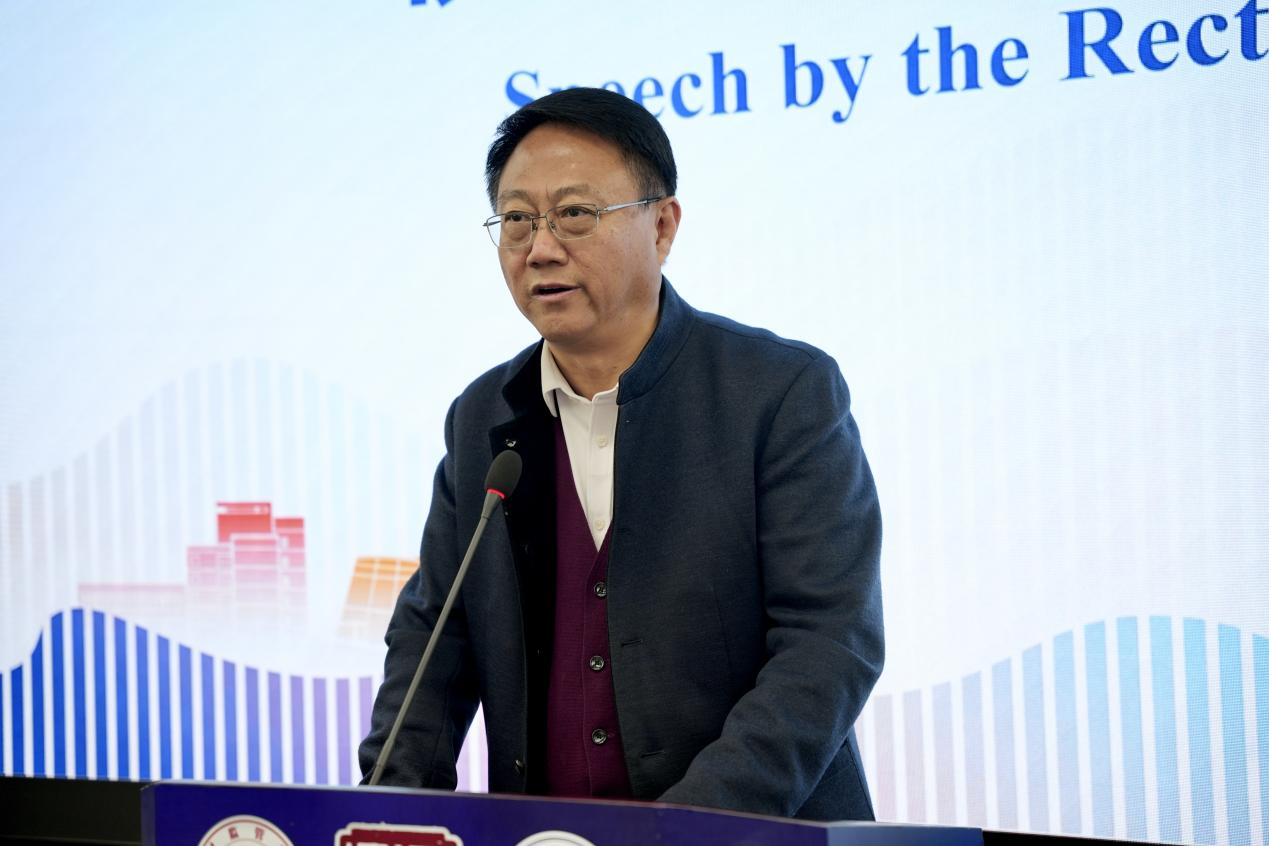
In his speech, Vice President Li warmly welcomed all participants and provided an overview of the university’s development and its research foundations in government regulation. He emphasized that ZUFE is fully implementing the “"New Finance and Economics Strategy"” to cultivate a national-level high-end professional think tank and construct an autonomous knowledge system in government regulation. He highly commended the ZUFE Regulation Think Tank—led by Professor Wang Junhao—for its significant achievements in theoretical innovation and policy consultation, noting that the symposium holds great significance for improving China’s regulatory systems and advancing the modernization of national governance.
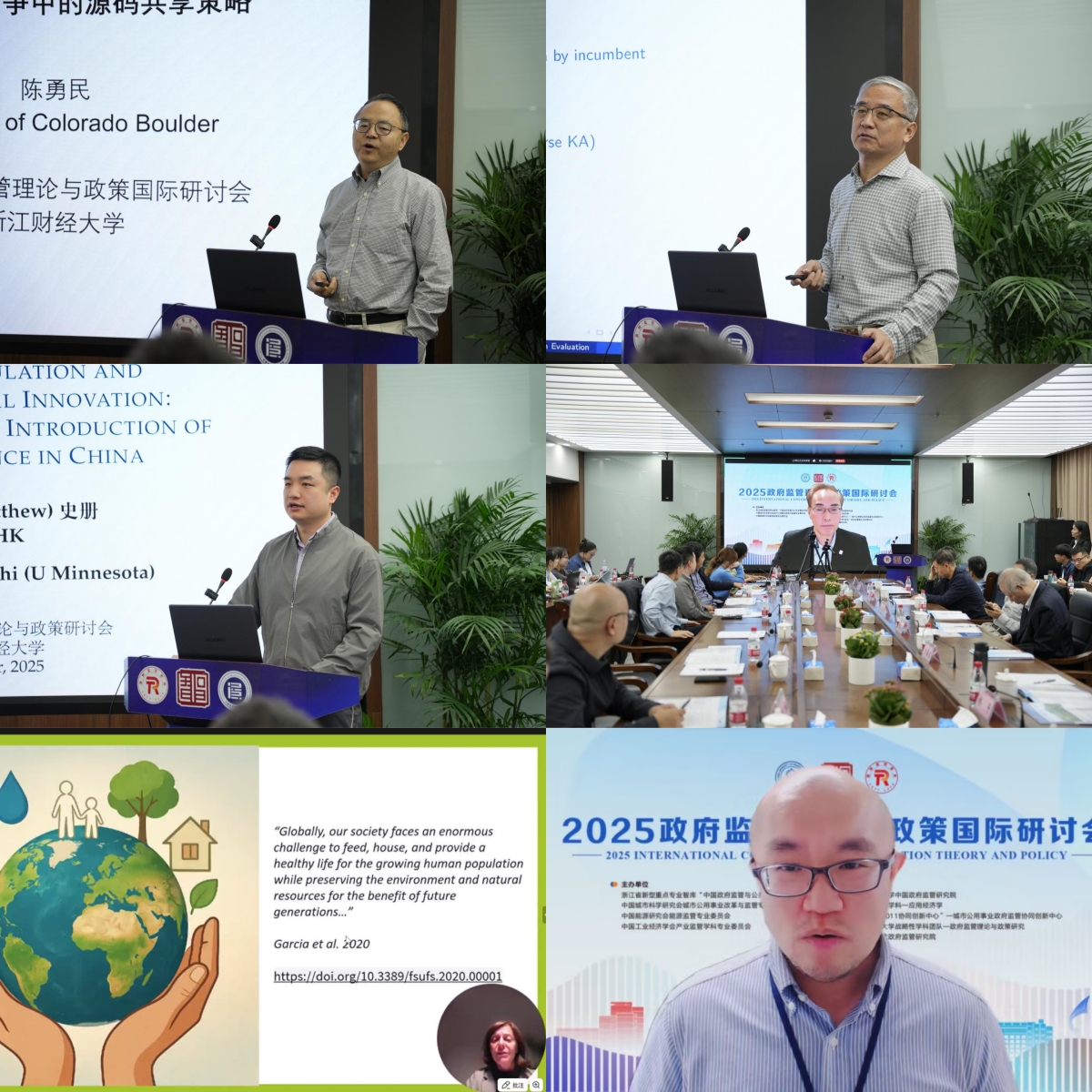
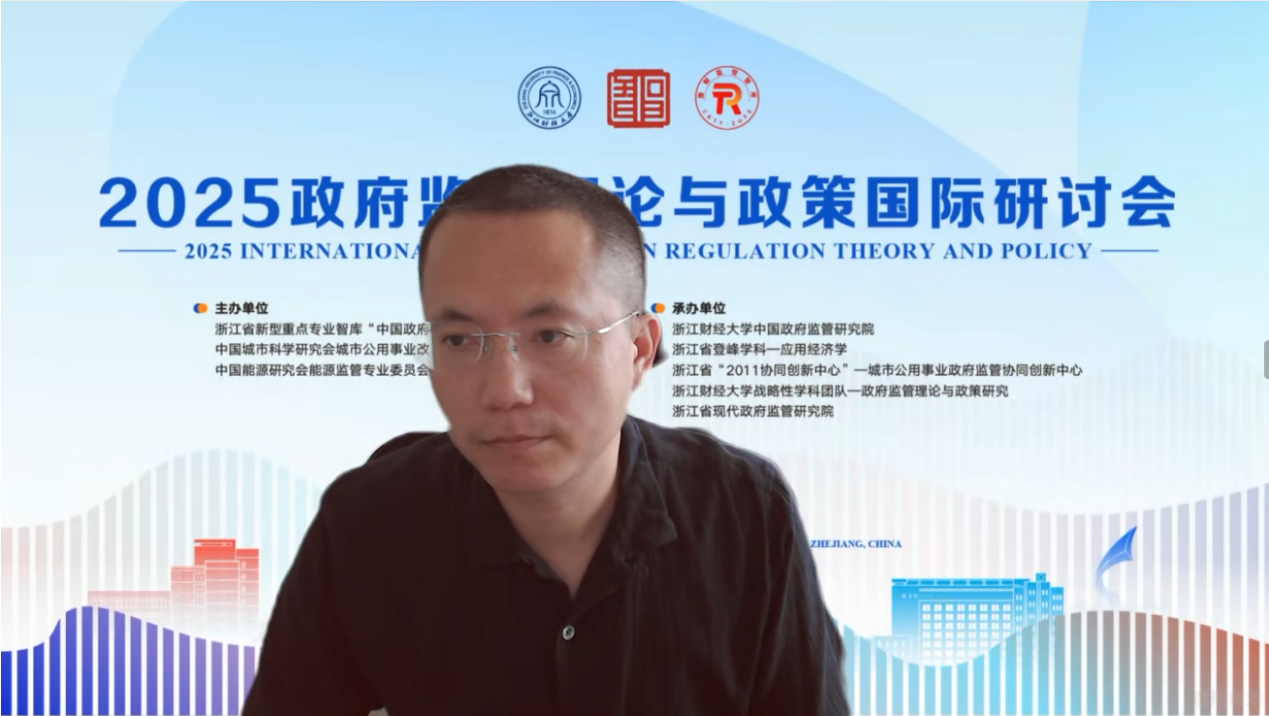
The morning session was chaired by Professors Jin Tong and Tang Yaojia of our university. Presenters included Professor Chen Yongmin (University of Colorado), Professor Lin Ping (Shandong University), Assistant Professor Shi Ce (The Chinese University of Hong Kong), Professor Wu Junjie (North Carolina State University), Professor Alessandra Guidi (Science and Technology Counselor, Embassy of Italy in China), Professor Li Zhen (Kansai University), and Associate Professor Ke Yongjian (University of Technology Sydney). They presented research on topics such as source-code sharing strategies in AI competition, merger assessments of startups, quality regulation and pharmaceutical innovation, environmental challenges in developing countries, EU food safety strategies, opportunities and challenges of data science and generative AI in business research, and social licensing of infrastructure projects.
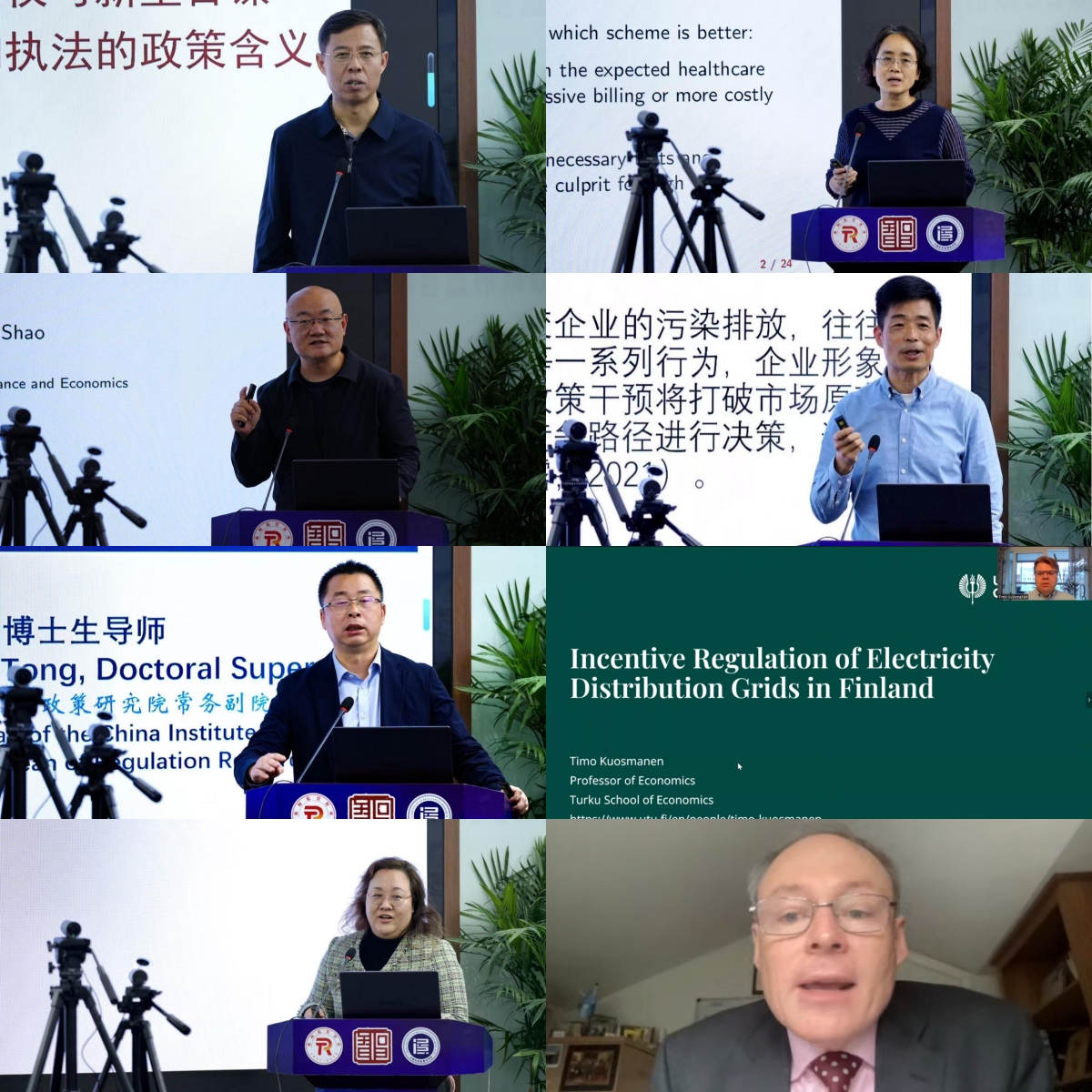
The afternoon session was moderated by Researcher Wang Ling and Associate Researcher Liu Xiangfeng of our university. Speakers included Professor Yu Zuo (Dongbei University of Finance and Economics), Professor Li Jianpei (University of International Business and Economics), Associate Professor Ju Heng (Shanghai University of Finance and Economics), Professor Wang Zili (Jiangxi University of Finance and Economics), Professor Jin Tong (ZUFE), Professor Timo Kuosmanen (University of Turku, Finland), Associate Professor Shen Caixia (ZUFE), and Professor Michael Pollitt (University of Cambridge). Their presentations covered cutting-edge issues such as code-sharing and collusion in civil aviation, ex-ante and ex-post contracting in expert markets, upstream monopoly effects on drug pricing, regulation versus competition, government oversight of low-altitude economy, Finnish distribution regulation theory and practice, bottleneck joint ownership in aviation, and energy regulation in the context of net-zero transition.
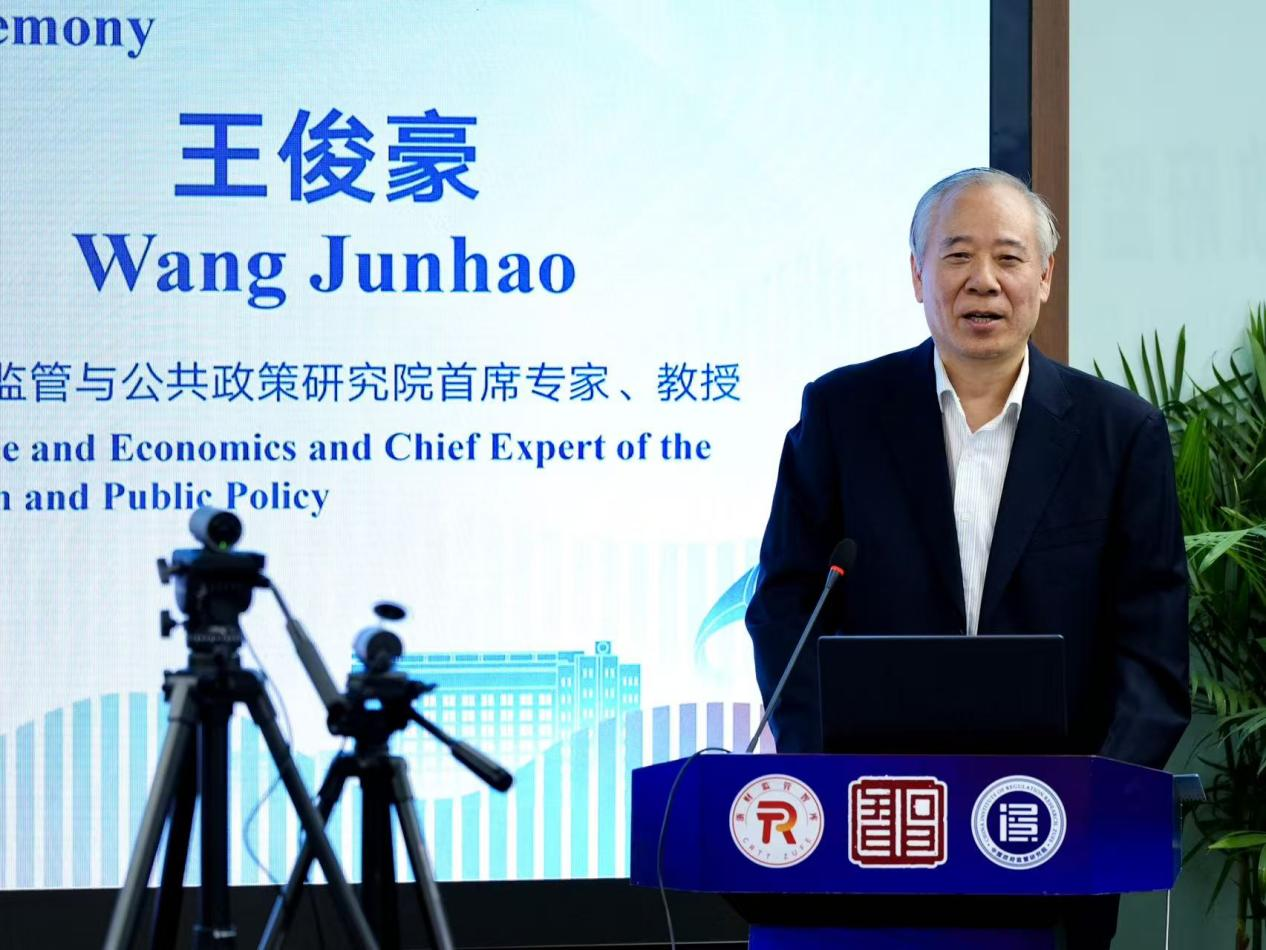
In his closing remarks, Professor Wang Junhao expressed gratitude to all participants and noted that the presentations were exceptionally deep and insightful within their respective domains. He highlighted that this symposium marked the highest level of international participation and influence in its history. As the organizer, the China Institute for Government Regulation and Public Policy is committed to advancing international research—supporting faculty in publishing articles and monographs in English. Going forward, the institute will continue to strengthen and sustain this international symposium as a dynamic platform for innovation in government regulation theory and policy.
Through intellectual exchange between domestic and international scholars, the symposium generated a series of innovative research findings and policy recommendations, fulfilling its role as a think tank in enhancing the effectiveness of China’s government regulation and modernizing national governance capacity.
(Correspondent: Zhang Ding Editor: Che Peng)