On June 3, the eighth session of the university’s “Hehe Academy” was held at the Academic Center. Professor Min Zhou, Member of the National Academy of Sciences (USA) and Fellow of the American Academy of Arts and Sciences, Endowed Chair Professor jointly appointed in the Department of Sociology and Department of Asian American Studies at the University of California, Los Angeles (UCLA), and Director of the UCLA Asia Pacific Center, delivered a keynote speech entitled “New Chinese Immigrants in Contemporary China: Immigrant Selectivity, Community Development and Social Integration”.
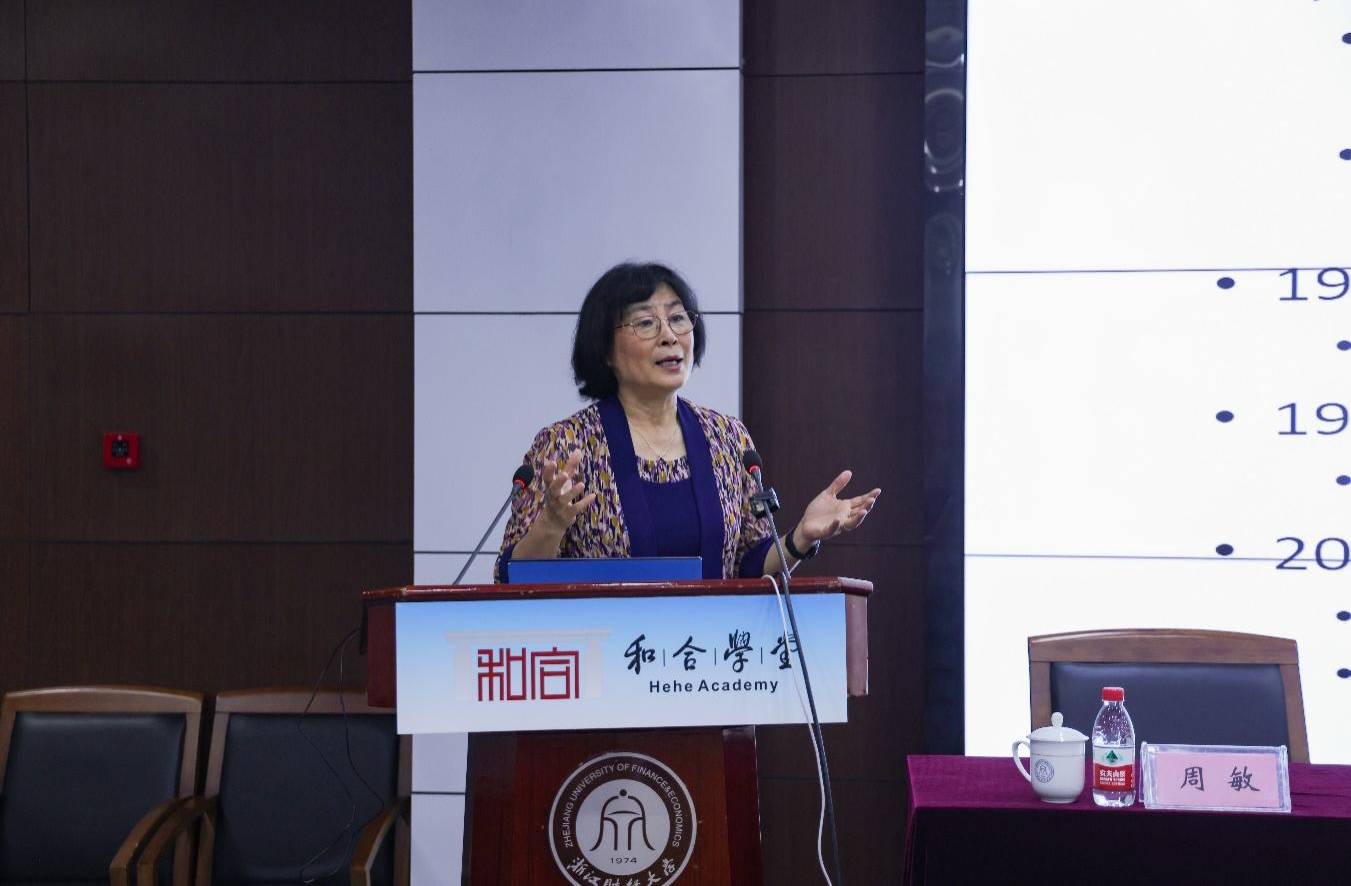
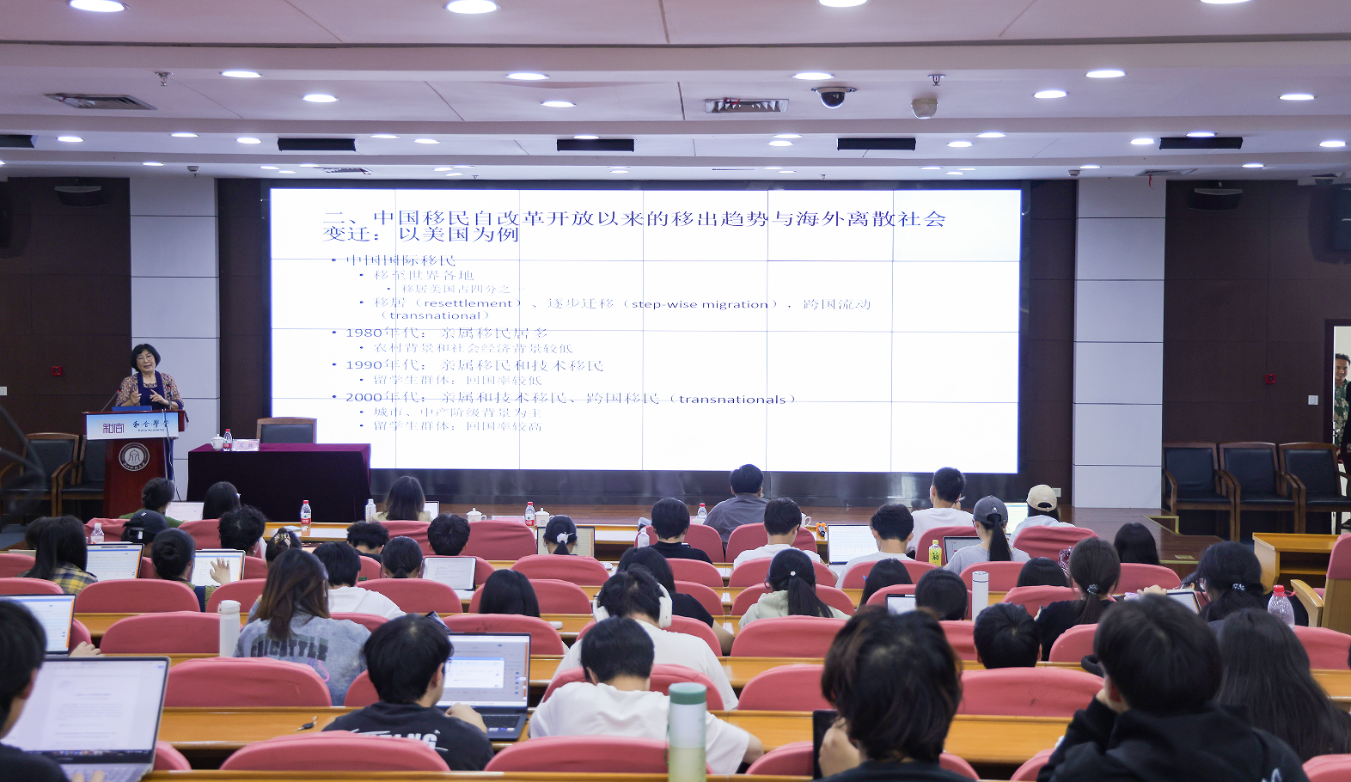
Against the backdrop of global migration trends, Professor Zhou introduced the flows, categories, and socioeconomic backgrounds of international migrants. Focusing primarily on Chinese communities in the United States, she pointed out that since China’s reform and opening-up, new Chinese immigrants have shown such characteristics as diversification in origins, socioeconomic backgrounds, settlement patterns, and the transformation of Chinese communities. She also put forward the concept of International Immigrant Selectivity and models of social integration for contemporary Chinese new immigrants from the perspectives of mainstream society, pathways of social integration, and immigrant viewpoint.
Professor Zhou elaborated on the academic concept of International Immigrant Selectivity, identifying three distinct mechanisms among new immigrants and their descendants in the United States: Ultra-high-end Selectivity, High-end Selectivity and Low-end Selectivity. She argued that the educational success of Chinese new immigrants is the result of both cultural and structural factors. On one hand, the academic achievements of new Chinese immigrants are boosted by the long-standing Chinese cultural tradition of valuing education and the prevalent American stereotype that Asian students excel academically. On the other hand, while the high starting point of the immigrant selectivity mechanism and the accumulation of community resources provide an advantageous foundation, the “Model Minority” label conceals the dilemma of being the “forever foreigner”. In the workplace, the invisible “Bamboo Ceiling” is even more difficult to break through than the “Glass Ceiling”. To address the social problem of institutional racism, the strength of a single ethnic group alone is far from sufficient; it requires uniting with other minority groups to jointly strive for equal rights and interests.
During the Q&A session, faculty and students engaged in lively discussions on topics including ethnic capital, International Immigrant Selectivity, identity formation and community development.
More than 80 attendees participated in the lecture, including heads of the International Office and the School of Law, as well as faculty and student representatives from the School of Law.
(Editor: Che Peng)