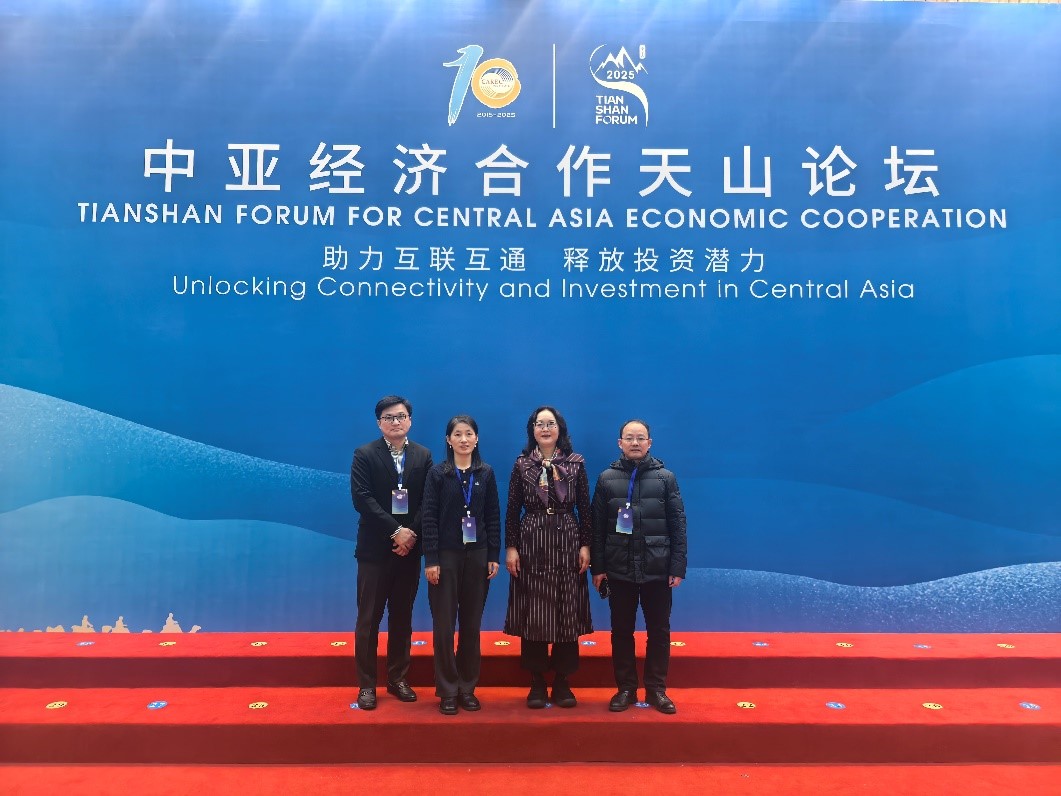
From December 2 to 3, the Tianshan Forum for Central Asia Economic Cooperation was held in Urumqi. Lan Foan, Minister of Finance; Chen Xiaojiang, Secretary of the CPC Xinjiang Uygur Autonomous Region Committee; Ahsan Iqbal, Minister for Planning, Development and Special Initiatives of Pakistan; Ganbat Jigjid, State Secretary of the Ministry of Finance of Mongolia; and Yang Yingming, Vice President of the Asian Development Bank, attended the opening ceremony and delivered speeches. Zheng Yali, Vice President of Zhejiang University of Finance and Economics (ZUFE) and Director of the Institute for Central Asia Studies, ZUFE, together with representatives from the School of International Education and Studies, School of Economics, and International Exchange and Cooperation Department, was invited to attend the forum.
During the forum, Zheng Yali participated in the roundtable discussion entitled “Promoting Digital Connectivity and Deepening Information Sharing”. Together with experts and scholars from institutions and think tanks including the Ministry of Artificial Intelligence and Digital Development of Kazakhstan, the Ministry of Economic Development and Trade of Tajikistan, the Georgian Innovation and Technology Agency, the Asian Development Bank, the United Nations Sustainable Development Goals and Leadership Development Center, and iFLYTEK, she engaged in discussions on bridging digital infrastructure gaps, promoting cross-border data connectivity, enhancing digital skills, and accelerating innovation-driven regional growth.
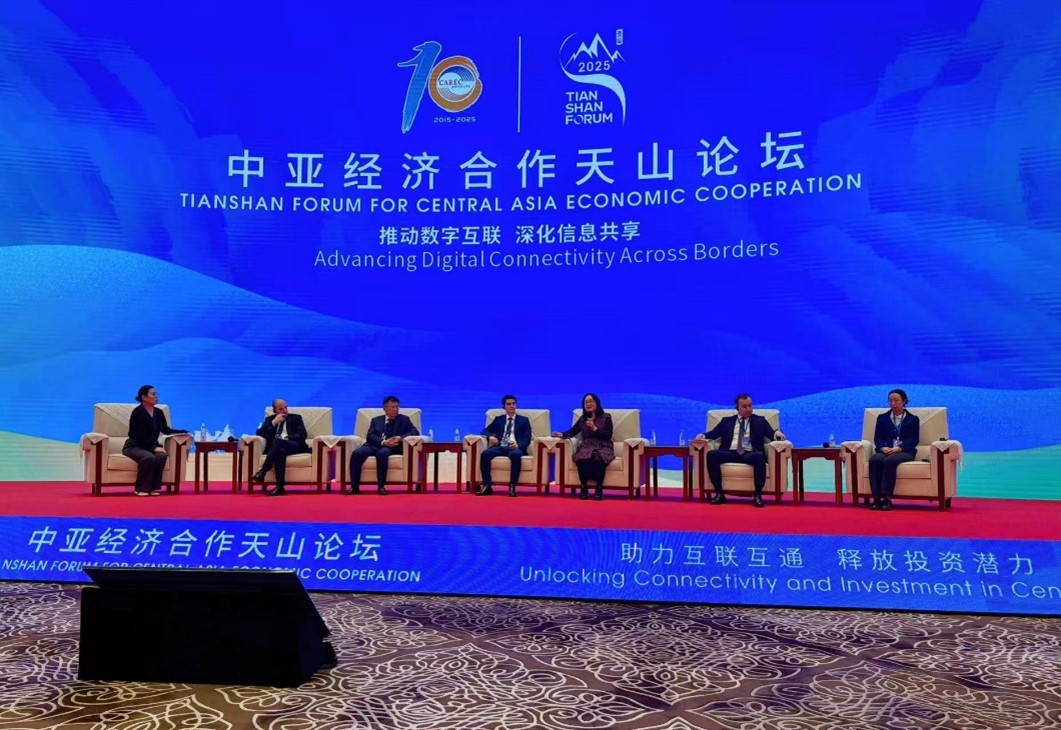
In her presentation, Zheng Yali pointed out that the restructuring of the global digital industrial chain is accelerating. As a hub of the Eurasian continent, Central Asia enjoys broad prospects for digital cooperation with China, and greater emphasis should be placed on human resource sharing and innovation support. In this regard, she proposed three suggestions. First, joint talent cultivation should be promoted. China possesses world-class digital enterprises, an industry-education integrated talent cultivation system, and an open, collaborative digital industrial ecosystem, placing it among the global leaders in digital talent development. China should actively cooperate with countries in the Central Asia cooperation region in cultivating digital talent through bilingual IT courses and the establishment of skills training centers for cross-border e-commerce and cloud computing operation and maintenance, thereby nurturing digital innovation talent. Second, innovation cooperation should be deepened. China and Central Asian countries should jointly establish a digital innovation alliance, accelerate the interconnection of digital infrastructure, and expand the depth of industrial cooperation. Regional investment funds should also be established to support early-stage technology projects. Third, differentiated development should be emphasized. Digital talent cultivation in Central Asia should be tailored to the scale of individual cities. Large cities may adopt a dual-track model combining “top digital academies” and order-oriented training, while small and medium-sized cities may rely primarily on order-oriented training models.
The presentation was highly praised by both domestic and international participants. Experts and scholars from the Economic Research Institute of the Ministry of Economic Development and Trade of Tajikistan, the National Financial Research Institute of Turkmenistan, and Manas University of Kyrgyzstan fully recognized ZUFE’s achievements in promoting Area Studies and China–Central Asia economic cooperation.
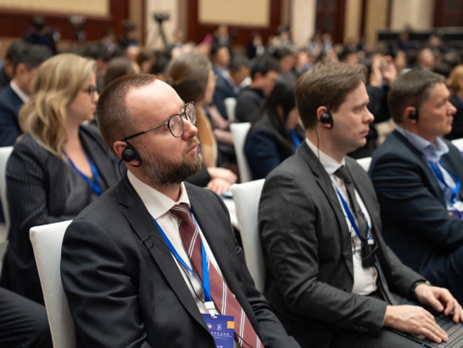
Under the theme of “Boosting Connectivity and Unleashing Investment Potential”, the forum was hosted by the Central Asia Regional Economic Cooperation Institute and co-organized by the People’s Government of the Xinjiang Uygur Autonomous Region. More than 300 representatives attended the event, including ministerial-level government officials from member countries of the Central Asia Regional Economic Cooperation (CAREC) Program, as well as representatives from multilateral and bilateral financial institutions, renowned think tanks, and private enterprises.
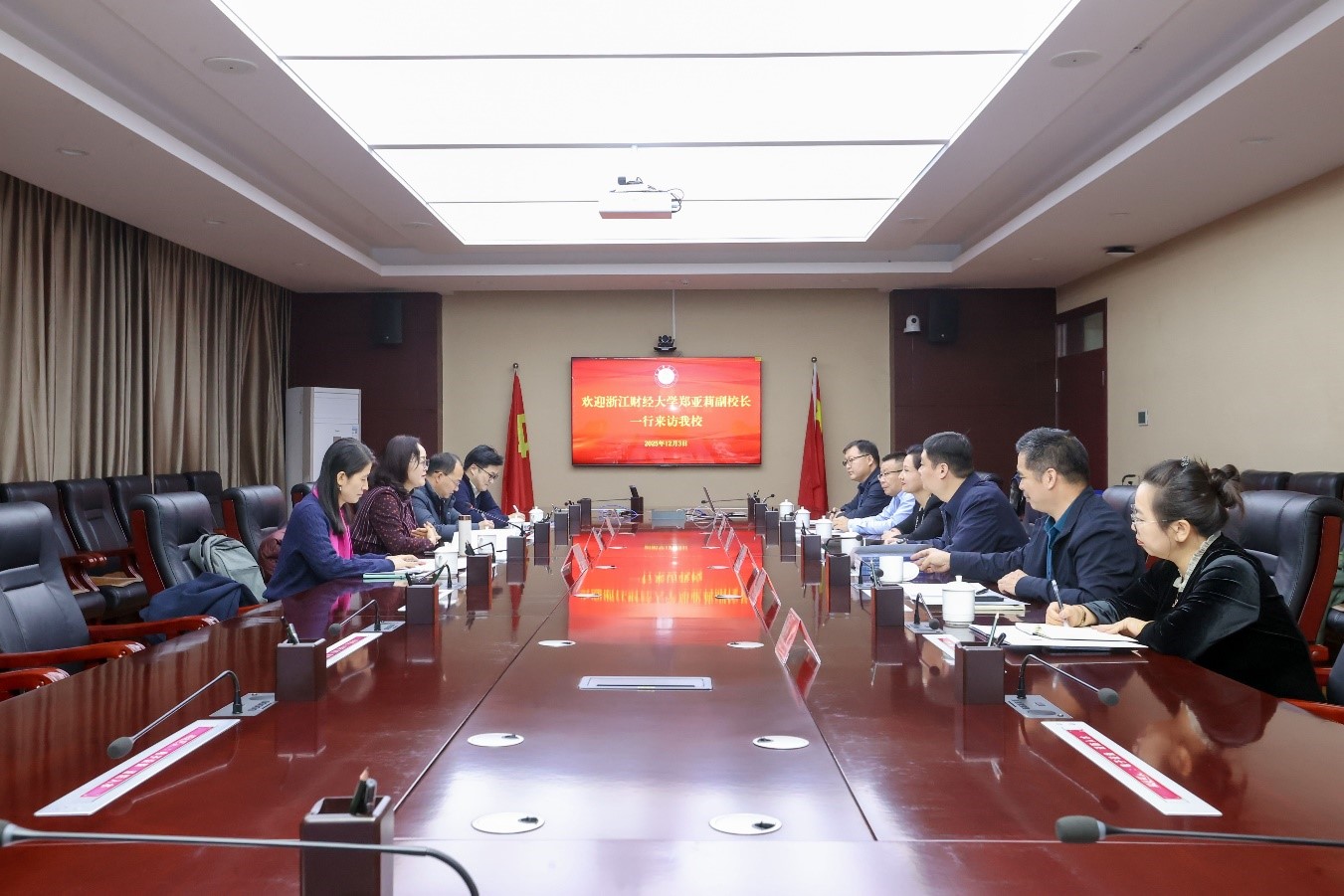
During the forum, Zheng Yali and her delegation also visited Xinjiang Normal University to conduct special research on Area Studies, think tank platform development, and international talent cultivation, where they were warmly received by Patiman Tursun, Member of the Standing Committee of the Party Committee and Vice President of Xinjiang Normal University.
(Correspondent: Chai Zhixian; Editor: Che Peng)